
CAEP accreditation is a seal of approval that assures quality in educator preparation. Accreditation makes sure that educator programs prepare new teachers to know their subjects, their students, and have the clinical training that allows them to enter the classroom ready to teach effectively.
Accreditation provides a framework that has pushed educator preparation programs to continually self-assess and conduct evidence-based analysis of their programs and their efficacy. These evidence-based shifts, rooted in continuous improvement, are helping to ensure that preparation programs are more likely to produce successful educators. (Source)
Undergraduate Programs
Educator Preparation Performance
The mission of the School of Education at Shawnee State University is to prepare educators to be learner-centered and inquiring professionals who can think critically, act ethically, communicate effectively, and work collaboratively to meet the diverse needs of all students.
The program hopes to develop educational professionals who will be change agents in their schools and communities through the implementation of evidence-based teaching practices and the demonstration of strong, yet collaborative, leadership qualities.
To prepare students for the dynamic responsibilities of contemporary schools, the program requires a strong foundation in an academic content or teaching area.
CAEP Annual Reporting Measures
(CAEP Standard 4.2)
The Council for the Accreditation of Educator Preparation (CAEP) has established four annual reporting measures which are used to provide information to the public on both program impact and program outcomes. The CAEP measures with links to supporting evidence for each measure are provided below:
Measure 1 (Initial): Completer Impact Effectiveness (R4.1)
The provider demonstrates that program completers effectively contribute to P-12 student learning and growth, and apply professional knowledge, skills, and dispositions in the P-12 classroom that the preparation experiences were designed to achieve.
Completer impact in contributing to P-12 student learning-growth and completer effectiveness in applying professional knowledge, skills, and dispositions
Description of Data:
Ohio's system for evaluating teachers (Ohio's Teacher Evaluation System) provides educators with a detailed view of their performance, with a focus on specific strengths and opportunities for improvement. The system is research-based and designed to be transparent, fair, and adaptable to the specific contexts of Ohio's school districts. Teachers receive a summative final rating of one of the following: accomplished, skilled, developing, or ineffective.
The Ohio Teacher Evaluation System (OTES) data addresses: (a) completer impact in contributing to P-12 student learning, and growth, and (b) completer effectiveness in applying professional knowledge, skills, and dispositions. Value-added analysis helps educators measure the impact schools and teachers have on students’ academic progress. The value-added measure is used in the OTES model. Teacher performance and student academic growth are the two key components of Ohio's evaluation system.
Limitations of the Ohio Teacher Evaluation System (OTES) Data:
- The information in the report is for individuals receiving their licenses with effective years of 2019, 2020 and 2021, and 2022.
- The teacher evaluation data in this report are provided by the Ohio Department of Education.
- Due to ORC 3333.041(B), annual results must be masked for institutions with fewer than 10 completers with OTES data.
| Initial Licensure Effective Year | Accomplished | Proficient | Developing | Ineffective |
|---|---|---|---|---|
| 2021 | <3 | <3 | 16 | 5 |
| 2022 | <3 | <3 | 12 | 3 |
| 2023 | <3 | <3 | 23 | 6 |
| 2024 | <3 | 6 | 24 | 3 |
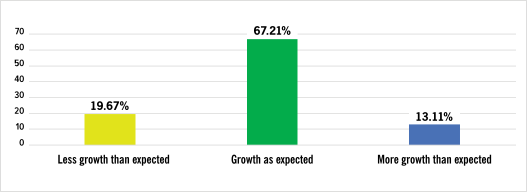
2024-25 Performance Levels
Measure 2 (Initial and Advanced): Satisfaction of Employers and Stakeholder Involvement (R4.2/R5.3/RA4.1)
Involvement of Internal and External Stakeholders in program design, evaluation, and continuous improvement processes
Stakeholder Committee meetings are held each academic year. The purpose of the Stakeholder Committee is to provide input on program design and continuous improvement. The Stakeholder Committee members include university supervisors and faculty, school and district administrators, and teachers. Each year members of the Stakeholder Committee are asked to complete a survey evaluating the performance of School of Education teachers.
Employers of graduates of the School of Education are surveyed each spring. A stakeholder meeting is also held each spring including Shawnee State University professors and administrators, employers, teachers, and school administrators. Information and data are shared during these meetings. This input is vital to the School of Education’s continuous improvement.
| Statement | Strongly Agree | Agree | Disagree | Strongly Disagree |
|---|---|---|---|---|
| 1. SSU prepares teachers to understand student learning and development. | 2023 61.9% (13) 2024 62.5% (25) 2025 53.85% (14) |
2023 28.57% (6) 2024 32.5% (13) 2025 50% (13) |
2023 4.76% (1) 2024 2.5% (1) 2025 0% (0) |
2023 4.76% (1) 2024 2.5% (1) 2025 0% (0) |
| 2. SSU prepares teachers to respect the diversity of the students, colleagues and families. | 2023 47.62% (10) 2024 50% (20) 2025 50% (13) |
2023 47.62% (10) 2024 47.5% (19) 2025 50% (13) |
2023 0% (0) 2024 0% (0) 2025 0% (0) |
2023 4.76% (1) 2024 2.5% (1) 2025 0% (0) |
| 3. SSU prepares teachers to know and understand the curriculum content for which they have instructional responsibility. | 2023 52.38% (11) 2024 52.5% (21) 2025 46.15% (12) |
2023 33.33% (7) 2024 40% (16) 2025 53.85% (14) |
2023 9.52% (2) 2024 5% (2) 2025 0% (0) |
2023 4.76% (1) 2024 2.5% (1) 2025 0% (0) |
| 4. SSU prepares teachers to understand and use evidence-based instructional strategies to effectively teach the concepts and skills for which they have instructional responsibility. | 2023 47.62% (10) 2024 47.5% (19) 2025 46.15% (12) |
2023 38.10% (8) 2024 45% (18) 2025 53.85% (14) |
2023 4.76% (1) 2024 2.5% (1) 2025 0% (0) |
2023 9.52% (2) 2024 5% (2) 2025 0% (0) |
| 5. SSU prepares teachers to understand assessment practices, their purpose and the data they generate. | 2023 52.38% (11) 2024 45% (18) 2025 42.31% (11) |
2023 38.10% (8) 2024 50% (20) 2025 57.69% (15) |
2023 4.76% (1) 2024 2.5% (1) 2025 0% (0) |
2023 4.76% (1) 2024 2.5% (1) 2025 0% (0) |
| 6. SSU prepares teachers to analyze data to monitor and support student progress. | 2023 35% (7) 2024 38.46% (15) 2025 30.77% (8) |
2023: 55% (11) 2024: 56.41% (22) 2025: 69.23% (18) |
2023 5% (1) 2024 2.56% (1) 2025 0% (0) |
2023 5% (1) 2024 2.56% (1) 2025 0% (0) |
| 7. SSU prepares teachers to use data to plan, differentiate and modify instruction. | 2023 42.86% (9) 2024 40% (16) 2025 30.77% (8) |
2023 38.10% (8) 2024 50% (20) 2025 65.38% (17) |
2023 14.29% (3) 2024 7.5% (3) 2025 3.85% (1) |
2023 4.76% (1) 2024 2.5% (1) 2025 0% (0) |
| 8. SSU prepares teachers to align their instructional goals and activities with school and district priorities. | 2023 57.14% (12) 2024 52.5% (21) 2025 38.46% (10) |
2023 33.33% (7) 2024 42.5% (17) 2025 61.54% (16) |
2023 0% (0) 2024 0% (0) 2025 0% (0) |
2023 9.52% (2) 2024 5% (2) 2025 0% (0) |
| 9. SSU prepares teachers to differentiate instruction to support the learning needs of all students. | 2023: 42.86% (9) 2024: 42.5% (17) 2025: 30.77% (8) |
2023: 42.86% (9) 2024: 50% (20) 2025: 65.38% (17) |
2023 9.52% (2) 2024 5% (2) 2025 3.85% (1) |
2023 4.76% (1) 2024 2.5% (1) 2025 0% (0) |
| 10. SSU Prepares teachers who are proficient in application of technology for the enhancement of P-12 Learning. | 2023 57.14% (12) 2024 65% (26) 2025 53.85% (14) |
2023 38.10% (8) 2024 32.5% (13) 2025 42.31% (11) |
2023 0% (0) 2024 0% (0) 2025 3.85% (1) |
2023 4.76% (1) 2024 2.5% (1) 2025 0% (0) |
| 11. SSU prepares teachers to engage in instructional practices that promote critical thinking, problem solving and encourage learner exploration. | 2023 57.14% (12) 2024 52.5% (21) 2025 34.62% (9) |
2023 23.81% (5) 2024 37.5% (15) 2025 61.54% (16) |
2023 14.29% (3) 2024 7.5% (3) 2025 3.85% (1) |
2023 4.76% (1) 2024 2.5% (1) 2025 0% (0) |
| 12. SSU prepares teachers to establish inclusive environments that are respectful, supportive and caring. | 2023 57.14% (12) 2024 62.5% (25) 2025 53.85% (14) |
2023 33.33% (7) 2024 32.5% (13) 2025 42.31% (11) |
2023 0% (0) 2024 0% (0) 2025 3.85% (1) |
2023: 9.52% (2) 2024: 5% (2) 2025 0% (0) |
| 13. SSU prepares teachers to engage in instructional practices that promote positive learning results for students. | 2023 57.14% (12) 2024 60% (24) 2025 53.85% (14) |
2023 38.10% (8) 2024 37.5% (15) 2025 46.15% (12) |
2023 0% (0) 2024 0% (0) 2025 0% (0) |
2023 4.76% (1) 2024 2.5% (1) 2025 0% (0) |
| 14. SSU prepares teachers to communicate clearly and effectively with students, colleagues and families. | 2023 47.62% (10) 2024 50% (20) 2025 34.62% (9) |
2023 47.62% (10) 2024 47.5% (19) 2025 61.54% (16) |
2023 0% (0) 2024 0% (0) 2025 3.85% (1) |
2023 4.76% (1) 2024 2.5% (1) 2025 0% (0) |
| 15. SSU prepares teachers to collaborate effectively with other teachers, administrators, staff and families. | 2023 52.38% (11) 2024 52.5% (21) 2025 42.31% (11) |
2023 38.10% (8) 2024 42.17% (15) 2025 53.85% (14) |
2023 4.76% (1) 2024 2.5% (1) 2025 3.85% (1) |
2023 4.76% (1) 2024 2.5% (1) 2025 0% (0) |
| 16. SSU prepares teachers to understand, uphold, and follow professional codes of ethics and district and state policies. | 2023 52.38% (11) 2024 57.5% (23) 2025 57.69% (15) |
2023 38.10% (8) 2024 37.5% (15) 2025 42.31% (11) |
2023 0% (0) 2024 0% (0) 2025 0% (0) |
2023: 9.52% (2) 2024: 5% (2) 2025 0% (0) |
| 17. SSU prepares teachers to assume responsibility for professional growth. | 2023 57.14% (12) 2024 60% (24) 2025 42.31% (11) |
2023 38.10% (8) 2024 37.5% (15) 2025 57.69% (15) |
2023 0% (0) 2024 0% (0) 2025 3.85% (1) |
2023 4.76% (1) 2024 2.5% (1) 2025 0% (0) |
| Area | 2023 | 2024 | 2025 |
|---|---|---|---|
| High School Social Studies | 46.15% (12) | 42.31% (11) | 40% (6) |
| High School Mathematics | 84.62% (22) | 57.69% (15) | 60% (9) |
| High School Language Arts | 61.54% (16) | 3.85% (1) | 46.67% (7) |
| High School Science | 69.23% (18) | 0% (0) | 60% (9) |
| High School Other | 19.23% (5) | 0% (0) | 20% (3) |
| Middle School Social Studies | 50% (14) | 42.86% (6) | |
| Middle School Mathematics | 67.86% (19) | 71.43% (10) | |
| Middle School Language Arts | 53.57% (15) | 28.57% (4) | |
| Middle School Science | 64.29% (18) | 28.57% (4) | |
| Middle School Other | 25% (7) | 14.29% (2) | |
| PreK-3 | 68.75% (22) | 62.5% (10) | |
| Intervention Specialist | 68.75% (22) | 75% (12) | |
| Art | 12.5% (4) | 12.5% (2) | |
| Other | 15.63% (5) | 25% (4) |
Involvement of Internal and External Stakeholders in program design, evaluation, and continuous improvement processes
Shawnee State University offers two graduate level licensure only programs through the Ohio Deans Compact LISD (Low Incidence Sensory Disabilities Programs) Collaborative.
Data below reflects the feedback from employers of completers of the Deaf & Hard of Hearing (TOD) and the Teacher of the Visually Impaired (TVI) programs. Employers are contacted to complete the evaluation one year after the teacher employed in their district has completed the advanced program in either Intervention Specialist Visually Impaired or Intervention Specialist Hearing Impaired.
| Statement | Strongly Agree | Agree | Disagree | Strongly Disagree |
|---|---|---|---|---|
| 1. The low incidence sensory disabilities programs at Shawnee State University prepare teachers to use augmentative, alternative and assistive technologies and their applications to support students. | 2020-2021 83.33% (5) 2021-2022 66.67% (2) 2022-2023 80% (4) |
2021 16.67% (1) 2021-2022 33.33% (1) 2022-2023 20% (1) |
2021 0.00% (0) 2021-2022 0% (0) 2022-2023 0% (0) |
2021 0.00% (0) 2021-2022 0% (0) 2022-2023 0% (0) |
| 2. The low incidence sensory disabilities programs at Shawnee State University prepare teachers to understand sensory impairment and its impact on families. | 2020-2021 100% (6) 2021-2022 100% (3) 2022-2023 100% (5) |
2020-2021 0.00% (0) 2021-2022 0% (0) 2022-2023 0% (0) |
2020-2021 0.00% (0) 2021-2022 0% (0) 2022-2023 0% (0) |
2020-2021 0.00% (0) 2021-2022 0% (0) 2022-2023 0% (0) |
| 3. The low incidence sensory disabilities programs at Shawnee State University prepare teachers to understand sensory impairment and its impact on instructional planning. | 2020-2021 83.33% (5) 2021-2022 66.67% (2) 2022-2023 100% (5) |
2020-2021 16.67% (1) 2021-2022 33.33% (1) 2022-2023 0% (0) |
2020-2021 0.00% (0) 2021-2022 0% (0) 2022-2023 0% (0) |
2020-2021 0.00% (0) 2021-2022 0% (0) 2022-2023 0% (0) |
| 4. The low incidence sensory disabilities programs at Shawnee State University prepare teachers to engage in professional practices that promote successful transitions. | 2020-2021 47.1% (8) 2021-2022 66.67% (2) 2022-2023 60% (3) |
2020-2021 47.1% (8) 2021-2022 33.33% (1) 2022-2023 40% (2) |
2020-2021 0.00% (0) 2021-2022 0% (0) 2022-2023 0% (0) |
2020-2021 5.9% (1) 2021-2022 0% (0) 2022-2023 0% (0) |
| 5. The low incidence sensory disabilities programs at Shawnee State University prepare teachers to engage in instructional practices that promote positive learning results in the general or special curricula. | 2020-2021 66.67% (4) 2021-2022 33.33% (1) 2022-2023 80% (4) |
2020-2021 33.33% (2) 2021-2022 66.67% (2) 2022-2023 20% (1) |
2020-2021 0.00% (0) 2021-2022 0% (0) 2022-2023 0% (0) |
2020-2021 0.00% (0) 2021-2022 0% (0) 2022-2023 0% (0) |
| 6. The low incidence sensory disabilities programs at Shawnee State University prepare teachers to engage in instructional practices that demonstrate the ability to modify learning environments for students with sensory impairment. | 2020-2021 83.33% (5) 2021-2022 66.67% (2) 2022-2023 100% (5) |
2020-2021 16.67% (1) 2021-2022 33.33% (1) 2022-2023 0% (0) |
2020-2021 0.00% (0) 2021-2022 0% (0) 2022-2023 0% (0) |
2020-2021 5.9% (1) 2021-2022 0% (0) 2022-2023 0% (0) |
| 7. The low incidence sensory disabilities programs at Shawnee State University prepare teachers to engage in instructional practices that foster educational environments in which diversity is valued. | 2020-2021 66.67% (4) 2021-2022 33.33% (1) 2022-2023 100% (5) |
2020-2021 33.33% (2) 2021-2022 66.67% (2) 2022-2023 0% (0) |
2020-2021 0.00% (0) 2021-2022 0% (0) 2022-2023 0% (0) |
2020-2021 0.00% (0) 2021-2022 0% (0) 2022-2023 0% (0) |
| 8. The low incidence sensory disabilities programs at Shawnee State University prepare teachers to engage in instructional practices that reflect and address IEP goals for students with sensory impairment. | 2020-2021 66.67% (4) 2021-2022 66.67% (2) 2022-2023 80% (4) |
2020-2021 33.33% (2) 2021-2022 33.33% (1) 2022-2023 20% (1) |
2020-2021 0.00% (0) 2021-2022 0% (0) 2022-2023 0% (0) |
2020-2021 0.00% (0) 2021-2022 0% (0) 2022-2023 0% (0) |
| 9. The low incidence sensory disabilities programs at Shawnee State University prepare teachers to engage in instructional practices that use assessment data to plan instruction for students with sensory impairment. | 2020-2021 66.67% (4) 2021-2022 66.67% (2) 2022-2023 80% (4) |
2020-2021 33.33% (2) 2021-2022 33.33% (1) 2022-2023 20% (1) |
2020-2021 0.00% (0) 2021-2022 0% (0) 2022-2023 0% (0) |
2020-2021 0.00% (0) 2021-2022 0% (0) 2022-2023 0% (0) |
| 10. The low incidence sensory disabilities programs at Shawnee State University prepare teachers to engage in professional practices that promote integration of students with sensory impairment into the general education learning environment. | 2020-2021 66.67% (4) 2021-2022 33.33% (1) 2022-2023 80% (4) |
2020-2021 33.33% (2) 2021-2022 66.67% (2) 2022-2023 20% (1) |
2020-2021 0.00% (0) 2021-2022 0% (0) 2022-2023 0% (0) |
2020-2021 0.00% (0) 2021-2022 0% (0) 2022-2023 0% (0) |
Measure 3 (Initial and/or Advanced): Candidate competency at program completion (R3.3/RA3.4)
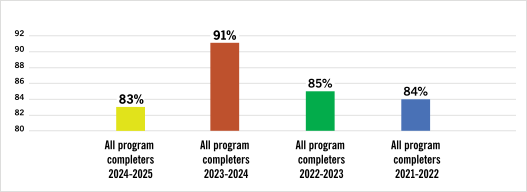
A measure of candidate competency at completion is the pass rate on the Ohio Assessments for Educators. The Ohio Assessments for Educators (OAE) program assesses the content-area and professional (pedagogical) knowledge of candidates who are seeking initial Ohio educator licensure or adding a new licensure area. The assessments are aligned with Ohio's Learning Standards. The OAE data are shown for the 2023-2024 academic year program graduates.
| Group | Takers | Pass Rate |
|---|---|---|
| All program completers 2024-2025 | 41 | 83% |
| All program completers 2023-2024 | 55 | 91% |
| All program completers 2022-2023 | 40 | 85% |
| All program completers 2021-2022 | 45 | 84% |
| Program | OAE Test Name & Number | Passed | Failed | Pass Rate |
|---|---|---|---|---|
| Advanced Licensure Program (Completers) | ||||
| Deaf & Hard of Hearing | 044 Special Education Specialist: Deaf/Hard of Hearing | 8 | 0 | 100% |
| Visually Impaired | 045 Special Education Specialist: Visually Impaired | 9 | <3 | 75% |
| Initial Licensure Program (Completers) | ||||
| Art | 006 Art | <3 | <3 | 100% |
| Early Childhood | 055 Early Childhood | 19 | <3 | 95% |
| Early Childhood Special Education | 058 Early Childhood Special Education | 8 | 0 | 100% |
| Adolescent & Young Adult (7-12) Integrated Language Arts, Integrated Science, and Mathematics | 020 English Language Arts 024 Integrated Science 025 Integrated Social Studies 027 Mathematics |
11 | 5 | 69% |
| Middle Childhood English Language Arts, Science, Mathematics, Social Studies | 028 Middle Grade English Language Arts 029 Middle Grade Science 030 Middle Grade Math 031 Middle Grade Social Studies |
7 | 0 | 100% |
| Intervention Specialist | 043 Special Education | 4 | 0 | 100% |
| Reading | 190 Reading/090 Reading | 42 | 7 | 86% |
| Assessment of Professional Knowledge | ||||
| Early Childhood | 057 Assessment of Professional Knowledge Early Childhood | 17 | 0 | 100% |
| Middle Childhood | 002 Assessment of Professional Knowledge Middle Childhood (4-9) | 5 | 0 | 100% |
| Adolescent & Young Adult | 003 Assessment of Professional Knowledge Adolescent & Young Adult | 10 | 0 | 100% |
| Multi-Age | 004 Assessment of Professional Knowledge Multi-Age (PK-12) | 5 | 0 | 100% |
Measure 4 (Initial and/or Advanced): Ability of completers to be hired in education positions for which they have prepared
The following employment data is from the Ohio Department of Higher Education Metric Reporting system (EVAAS) for academic year 2023-2024. Employment shown is any position held by a Shawnee State University graduate in Ohio's public schools in the 2023-2024 academic year.
| Position | N |
|---|---|
| Advisor Assignment | 6 |
| Assistant Principal Assignment | 7 |
| Coaching Assignment | 22 |
| Counseling Assignment | 1 |
| Full-time (Permanent) Substitute Teacher Assignment | 1 |
| Other Professional - Educational Assignment | 5 |
| Principal Assignment | 3 |
| Remedial Specialist Assignment | 1 |
| Supplemental Service Teaching Assignment (Serves Students with Disability Conditions Only) | 44 |
| Teacher Assignment | 194 |
| Tutor/Small Group Instructor Assignment (Serves Students Without Disability Conditions Only) | 3 |
| Total | 287 |
Ohio Department of Higher Education
- 2024 Ohio Educator Performance Statewide Report Overview (PDF)
- 2024 Ohio Educator Preparation Provider Performance Report Shawnee State University (PDF)
Consumer Information