
April 15, 2026
Students in the Master of Occupational Therapy and the Bachelor's in Plastics Engineering Technology programs at Shawnee State University recently came together for an interdisciplinary learning experience, one that challenged them to collaborate across disciplines to design and build assistive devices using 3D printing technology.
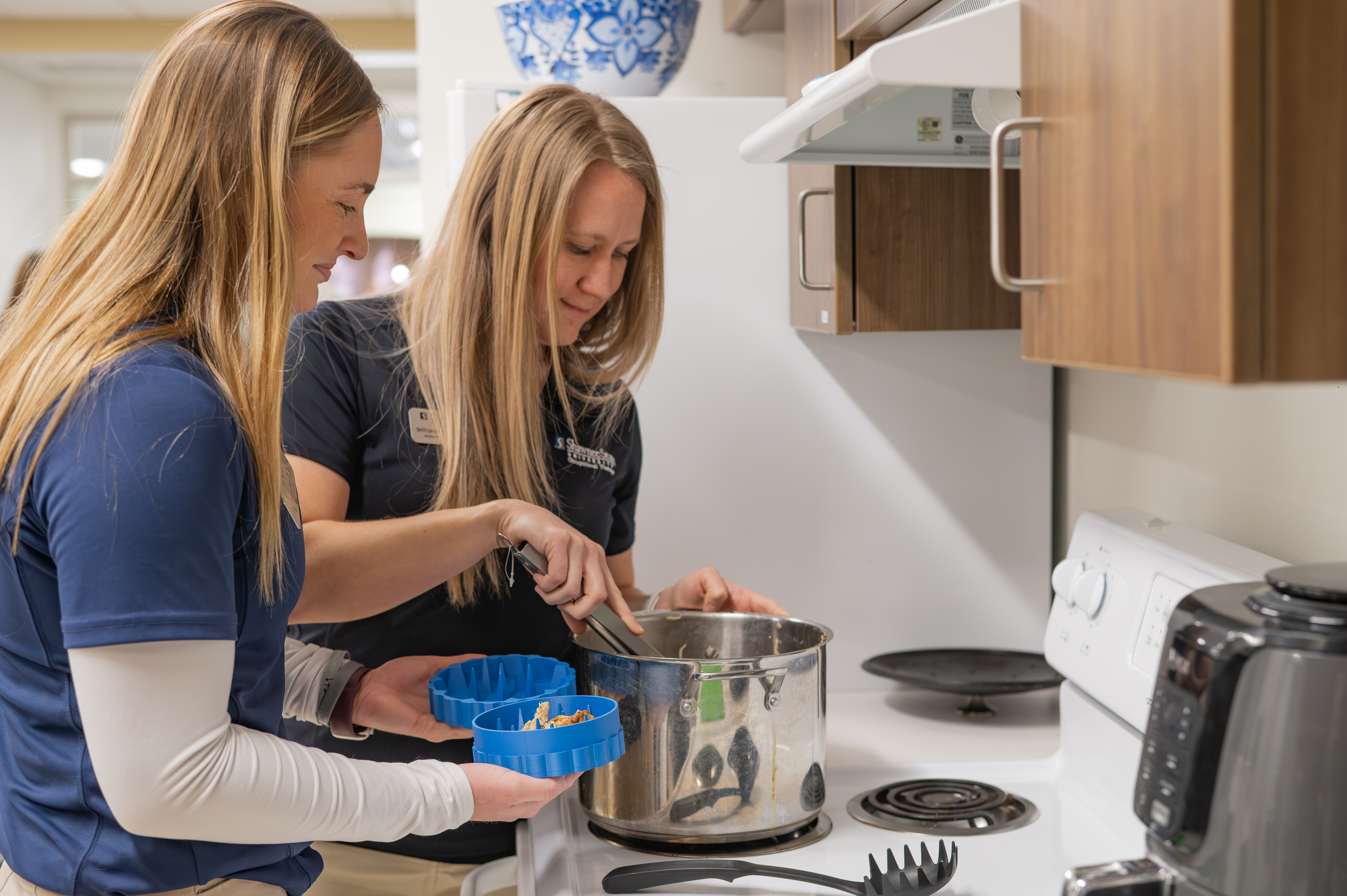
The project gave students a hands-on opportunity to apply their respective expertise in a real-world context, from identifying evidence-based solutions to engineering and fabricating functional prototypes. Four devices were completed as part of the collaboration, including a custom meat shredder designed for a community volunteer whose hand neuropathy had made cooking increasingly difficult, and a wheelchair-mounted gardening table created to help another community volunteer continue pursuing their passion for gardening.
"This collaboration between our occupational therapy program and plastics engineering is not theoretical," said Alissa Cannoy, Director of the Master of Occupational Therapy. "Our students are able to assess a real need, justify it with evidence, and work together and problem-solve to physically build a solution."
For occupational therapy students, the experience deepened their understanding of how emerging technologies can expand what's possible in their field.
"I knew that we could always come up with different assistive devices, and occupational therapy has always been working with what you have and adapting on the way," said Cameryn Davidson, who worked on the meat shredder project. "But working with the 3D printing lab has definitely opened up new doors, inexpensive ways to help community volunteers, and made it personalized to them."
For plastics engineering students, the experience offered something equally valuable: the chance to apply technical skills in a human-centered context.
"It felt good being able to help someone out," said Jayden Underwood, who designed the wheelchair gardening table. "Not many people understand or know 3D printers. So being able to help someone and make something, it felt really good."
One plastics engineering technology student had a more personal connection to the work.
"My mother actually graduated from the occupational therapy program 20 years ago," said Logan Salisbury. "It was neat being able to work with something I grew up around as well."
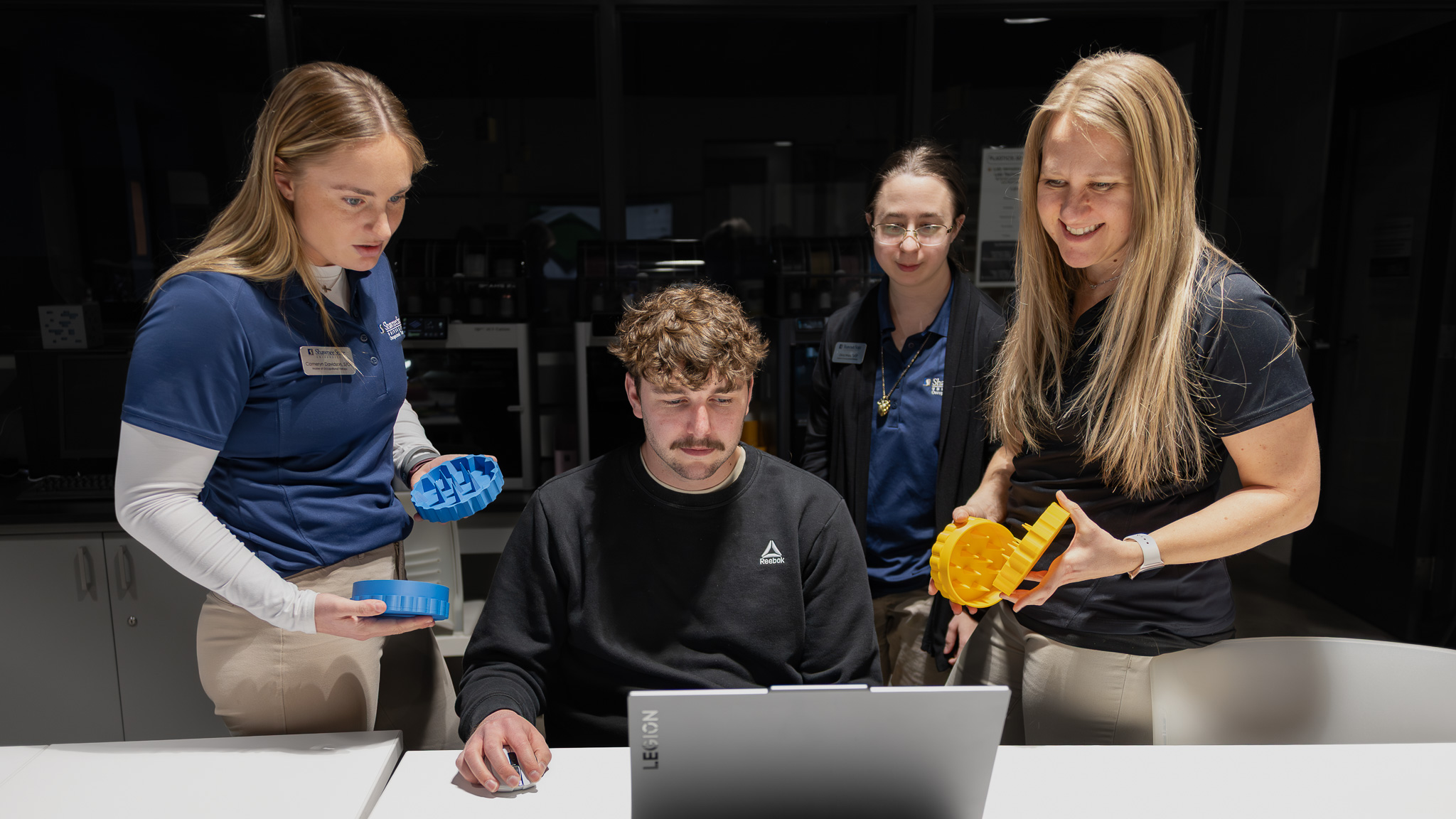
Adam Miller, Interim Dean of the College of Business and Engineering Technology, sees projects like this as a model for the kind of learning Shawnee State is uniquely positioned to offer.
"Innovation, when people work as a team, really brings out the best of the different types of disciplines," Miller said. "I believe innovation happens at the intersection of different disciplines and people bringing those ideas together. This project is a really good example of that."
Cannoy echoed that sentiment, pointing to the collaboration as a reflection of what sets Shawnee State's programs apart.
“Our students graduate understanding client-centered care and how to collaborate across professions to support an interdisciplinary approach to treatment, which is unique and important in our professions,” Cannoy said. “We're not just imagining solutions with this collaboration. We build something tangible that could improve someone's independence.”