
May 21, 2025 Between 2022 and 2023, artificial intelligence (AI) users generated an estimated 15 billion images through text-to-image algorithms. Every day, artists, designers, amateurs, and curious tech tinkerers generate about 34 million images using AI, according to a report from Everypixel Journal, and 83% of visual creatives reported integrating AI into their artistic processes in a 2023 survey.
The rise of AI in graphic design has sparked debates about the future of the profession. Many fear that AI will eventually replace graphic designers, with 37% of survey respondents saying they worry about jobs in the creative industries. Despite the worry, 80% of respondents are hopeful that AI will support them in their creative aspirations. While AI is certainly revolutionizing the graphic design industry, it's likely going to change the nature of the graphic design profession long before it's able to replace human graphic designers altogether.
AI graphic design can be viewed as a tool that will enhance creativity, efficiency, design possibilities, and, of course, generative capacity. Its advent can be understood as a simple technological advancement, comparable to the many advancements that have occurred throughout the history of graphic design, from cave paintings and chiseled stone advertisements to the printing press, screen printing, digital cameras, and digital design software. Yes, AI is a major advancement and stands to revolutionize the art world, but it is not yet poised to replace humans in art.
AI is an impressive, high-powered tool that human graphic designers can use to enhance their talents and accelerate their processes. However, AI won't be replacing human creativity, the human eye for graphic design, critical thinking, or human storytelling anytime soon. These qualities and talents are unique to humans, and they will remain critical to designing for a human audience.
The Evolution of AI in Graphic Design
What Is AI in Graphic Design?
AI use in graphic design is not exactly a new concept. We have been using photo filters and basic automated image editing since the mid-2010s on social media platforms, like Instagram and Snapchat. Today's AI capabilities take these filters to the next level with several new, increasingly powerful capabilities, such as:
- Image recognition
- Image generation
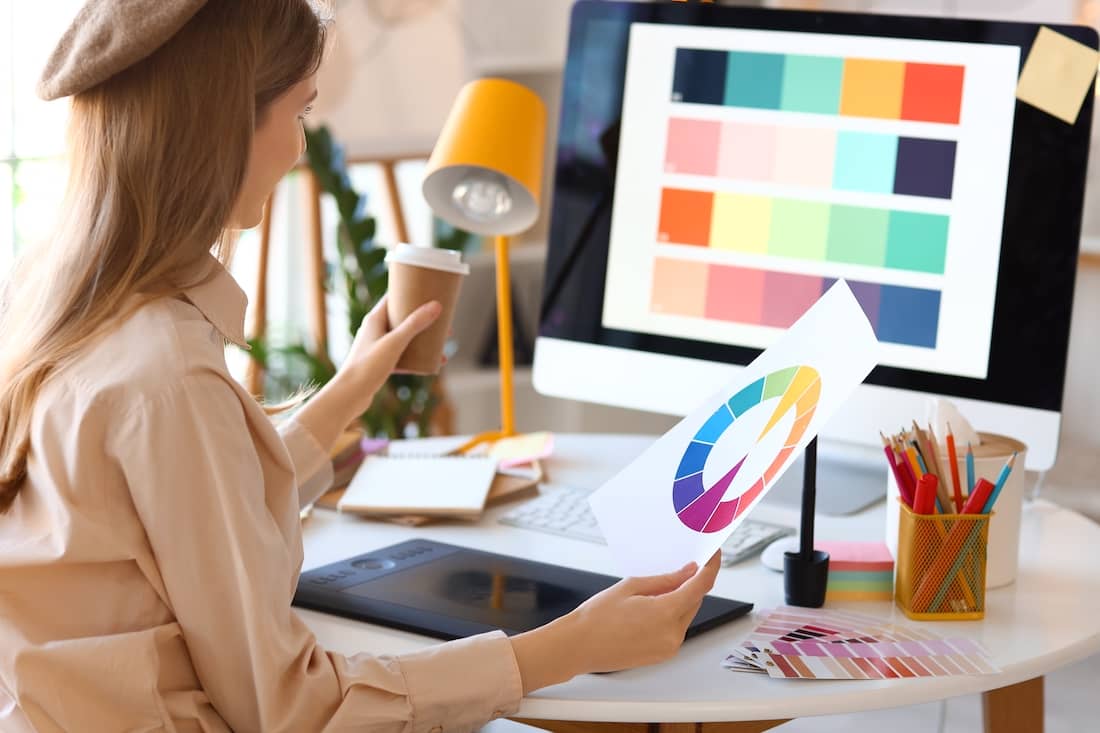
- Color palette suggestion
- Stylistic enhancement
- Typography creation
- Layout design
- Instant visual editing
Contemporary AI has become a powerful tool in graphic design. If artists embrace change, then they will see that design and artificial intelligence go hand in hand, just like all of the technological advancements that came before.
The Role of Generative AI in Graphic Design
In graphic design, AI can now be used to accelerate the generative process. Working with AI is similar to working with a highly capable assistant. Graphic designers can use AI to:
- Generate custom images
- Edit their existing artwork
- Design logos, icons, typography, and other branding elements
- Accelerate the creative process to serve more clients
- Develop templates and auto-layouts
- Automate resizing designs and templates
In addition, AI can help enhance the human designer's creative process when used to generate quick mock-ups of concepts — allowing designers to preview their ideas before they invest the time and effort into bringing them to full fruition.
How Designers Are Using AI to Enhance Creativity
AI as a Creative Partner, Not a Replacement
AI excels at handling repetitive tasks (such as generating mockups, editing, and resizing) to improve workflow efficiency and enable designers to focus on higher-order tasks such as concept development and storytelling. Despite advancements in AI, compelling design still depends on human creativity, emotion, understanding, and originality.
Practical Applications of AI in Design
AI offers several practical applications to graphic designers that can free up their time to focus on higher-level tasks. AI's image recognition capabilities can be harnessed to organize a designer's assets and portfolio, and its generative tools can be used to quickly fill up an inspiration board. Some of AI's practical applications in graphic design include:
- Quickly producing different iterations of design mockups
- Brand identity creation
- Logo generation
- Suggested color palettes
- Typography design and suggested font pairings
AI is an invaluable tool for user experience (UX) and user interface (UI) designers, too, as it can assist with the initial wireframing process — creating basic representations and overviews of an interactive design while providing suggestions for a basic layout, structure, and functionality.
The Designer's Role in AI-Generated Work
With “intelligence” that is, at the end of the day, “artificial,” AI lacks emotional intelligence, ingenuity, critical thinking, and understanding of the world. Thus, the human graphic designer plays a significant role in generating, editing, personalizing, refining, and finalizing AI art to ensure it's good enough for a human audience. A graphic designer can use AI, but they still have to learn to work with the tools and write productive prompts in order to shape brand storytelling and user experiences.
AI Tools for Graphic Design
As AI takes hold in more industries and becomes a primary design tool, more tools focused on AI for graphic design are becoming available. Some of the most popular include:
- Adobe Sensei and Adobe Firefly - Adobe Sensei helps designers streamline their content workflows and develop customer journey maps based on user data and behaviors, while Adobe Firefly is an in-suite text-to-image generative AI tool.
- Canva Magic Studio - With Magic Studio, users can access both free and paid graphic design AI tools for generating images, designing layouts, and more.
- Runway ML - Runway ML is an easy-to-use online AI-powered video editor that helps users create professional-looking videos in a fraction of the time that manual editing requires.
- DALL·E - DALL·E is the text-to-image generator from OpenAI that helps creatives translate their ideas into images.
- Midjourney - Developed and hosted by an independent lab, Midjourney is another text-to-image generator.
Will AI Replace Graphic Designers? The Truth Behind the Debate
Ultimately, AI is a graphic design tool, not a substitute for human graphic designers.
The Human Advantage in Graphic Design
The primary advantage humans hold over AI is the fact that it is humans who comprise our audience and target market. On its own, AI can't replace the human experience, our understanding of the world, our ability to have original thoughts, and our knack for innovation. It lacks cultural understanding, emotion, and a personal artistic touch.
AI's Limitations in Design
AI has several limitations in graphic design and art. For example, AI-generated images are based on patterns it observes throughout all the images it has studied. While this isn't too different from how humans learn about art, AI lacks ingenuity and the ability to innovate and create something completely original. This considerably limits the creativity of AI.
Many artists are concerned about the ethical implications of this. For instance, the fact that AI can quickly generate images in the style of a well-known artist skirts the boundaries of copyright and artistic ownership.
Additionally, AI has limitations that impact the quality of the images it produces. AI lacks human common sense and our deep understanding of the world. In turn, it produces images that don't always reflect reality. (Consider AI's challenges with accurately representing human hands in its images.) Not to mention, AI doesn't have emotional intelligence or empathy, which results in AI-generated images often falling flat and feeling soulless.
As a result, an AI graphic designer must think of AI as a new medium. Like paint, AI art isn't art without the control, guidance, and inspiration of the human mind and hand.
Industries Continue to Prioritize Human Designers
Human designers will always be valuable because businesses value originality, storytelling, and unique brand identity. This makes human graphic designers essential to marketing agencies, startups, and corporations. These industries still require designers who can think critically, understand nuance, adapt, and innovate.
Why a Graphic Design Degree Is Still Essential
Studying graphic design will help you leverage your capability for human intelligence, critical thinking, and understanding while developing your artistic eye.
Building Fundamental Knowledge
Through earning a degree in graphic design, students acquire fundamental knowledge by learning subjects like color theory, typography, composition, UX/UI design, and more to build a solid creative foundation. While AI can generate designs, only humans can truly grasp the principles that make designs effective.
Gaining Hands-on Experience and Industry Skills
A graphic design degree includes practical coursework, portfolio development, and hands-on projects where students develop practical skills, gain experience, and learn to use industry-standard tools (such as Adobe Creative Suite, Figma, and AI-powered software).
Networking and Career Opportunities
Attending a university program opens a variety of doors. Graphic design students have access to internships, mentorships, and industry connections. They develop a network of peers within the industry through the process of their coursework.
In addition, many graphic design jobs require formal training and/or a degree for individuals to qualify for entry-level positions in the industry. So, a graphic design degree not only provides opportunities during school; it also fulfills basic graphic design job requirements.
Critical Thinking and Adaptability in Design
In a design program, students develop problem-solving and conceptual thinking skills that an AI cannot replicate. They gain an understanding of design strategy, branding, and user experience — skills that are crucial to long-term career success in the industry.
The Future of AI and Graphic Design: What's Next?
While no one can predict the future with 100% accuracy, we can make some educated projections about what will happen with the future of AI in graphic design.
AI's Role Will Continue to Evolve
AI's capabilities will evolve and strengthen. It will be used to enhance the graphic design workflow, rather than replace graphic designers. Future developments will likely further automate processes, but human oversight will remain necessary.
How Designers Can Stay Competitive
AI is already a part of our reality, and graphic designers who embrace AI-powered tools will make themselves more competitive within the industry. Instead of resisting AI, graphic designers should learn to use AI-powered tools, stay current with industry trends, and keep up with emerging technology. They can hone the value they bring to the table as humans by focusing on creative direction, brand strategy, storytelling, and user experience.
Collaboration Between AI and Designers
AI can speed up ideation and workflows, but human designers must still refine, personalize, and innovate. Humans who leverage the power of AI tools will be able to work faster and smarter than graphic designers who choose to continue doing everything the old-fashioned way. Conversely, graphic designers who rely too heavily on AI will struggle to compete with designers who maintain an active role in their processes and designs.
Step Into a Creative Career with Shawnee State's Graphic Design Program
At Shawnee State University, our graphic design students emerge at the industry's cutting edge. Pursuing a Bachelor of Fine Arts in Graphic Design, students cover traditional skills (branding, print, and web), digital design, and portfolio development while learning to work within AI-enhanced workflows. The degree program helps students graduate equipped to work as graphic designers across a diverse range of industries, from marketing agencies to tech startups. If you're ready to step into the future of AI in graphic design, apply to Shawnee State University today!