Art History Minor
Learn how art changes — and changes us — from ancient cultures through contemporary practice, in small classes taught by faculty who care about your work.

Program Overview
Shawnee State University's Minor in Art History offers an incredible opportunity to explore the development of art from ancient times to today. This minor is designed to give you a historical and critical perspective on how different art forms have evolved. It provides a comprehensive understanding of the cultural and social settings in which art has been created throughout history. The minor requires seven art history courses, totaling 21 credit hours. You'll start with two required art history survey courses (6 credit hours) that introduce you to key periods and styles. After that, you get to choose five additional art history courses at the 3000 level or above, allowing you to focus on areas that truly spark your interest.
Adding an Art History minor can be a powerful complement to almost any major. Studying art history isn't just about memorizing names and dates; it's about developing strong critical thinking skills, learning to analyze visual information, and understanding complex cultural contexts. These abilities are highly valuable in a wide range of careers, from marketing and design to education, museum work, and even business. You'll also enhance your research and communication skills, which are essential for success in any professional field.
At Shawnee State University, you will benefit from smaller class sizes, which means your professors will get to know you personally and can offer more individualized attention and support. This creates a more engaging and interactive learning environment where you can actively participate and discuss ideas. SSU's campus is also easily accessible, making it convenient to attend classes and connect with faculty and fellow students. You'll be learning from dedicated faculty who are passionate about art history and committed to fostering your critical thinking and scholarship.
At A Glance
Art History Minor
Degree
Minor
Format
On campus
Length
Complete alongside your major
Credits
21
Class Size
12:1
Location
Main Campus, Vern Riffe Center for the Arts
Why Study Art History Minor at Shawnee University
You'll build skills that transfer everywhere — close reading of images, cultural analysis, clear writing — the kind of thinking employers and graduate programs prize.
You'll work with faculty who teach in small classes and know your writing, not just your name. That makes critique sharper and growth faster.
Two required surveys give you the chronology and vocabulary; the rest of the minor is yours to shape — five upper-level courses in the areas that interest you most.
It complements almost any major. Communication, business, marketing, history, fine arts, education, and museum studies all benefit from the analytical and cultural training art history builds.
The Art History Minor requires 21 credit hours — two required survey courses plus five upper-level electives at the 3000 level or above.
- ARTH 2211 — Art History Survey 1 (3 credits)
- ARTH 2212 — Art History Survey 2 (3 credits)
- Five art history courses at the 3000 level or above (15 credits) — chosen to fit your interests
The Art History Minor is a strong fit for students majoring in:
- History
- Bachelor of Fine Arts (Studio Arts, Graphic Design, Game & Simulation)
- Communication
- Business and marketing
- Education
- Any student curious about the long story of art across cultures
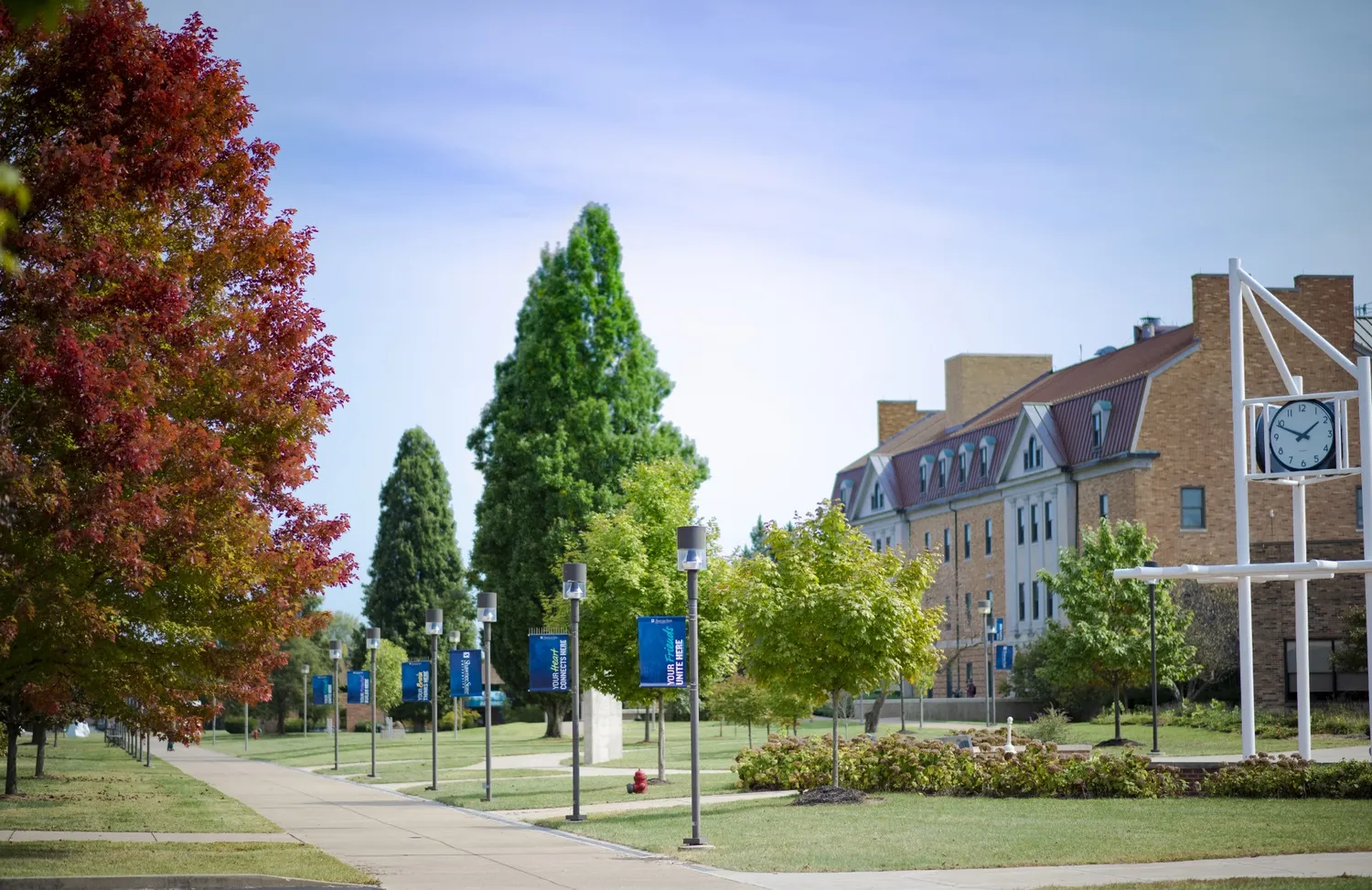
Classes meet on the Shawnee State campus in Portsmouth, Ohio.
Art History Minor Frequently Asked Questions
Yes. Many students pair Art History with majors in fine arts, history, communication, business, or education. Talk with your advisor about course sequencing so the minor fits cleanly into your degree plan.
No — Art History is offered on campus. Some individual sections may run online or hybrid; check the schedule each term.
Graduates with an art history background work in museums and galleries, education, marketing and communications, publishing, design, and arts administration. The minor pairs well with graduate study in art history, museum studies, library and information science, and law.
No. The two survey courses build the vocabulary and chronology from the ground up.
